

The environment you surround yourself with profoundly impacts your ability to focus, process information, and sustain energy throughout the day. A poorly arranged room easily leads to physical discomfort and mental fatigue, severely limiting your daily output.
By contrast, a thoughtfully designed physical environment supports cognitive function and helps maintain sharp concentration for hours at a time.
Designing an optimal area requires careful attention to both physical and psychological factors. People often underestimate how minor adjustments to lighting, furniture, and spatial organization can fundamentally alter their daily workflow. When you purposefully arrange your surroundings, you actively reduce the friction that normally disrupts your attention span.
Implementing smart design strategies allows you to build an environment that caters specifically to your professional needs. The goal is to establish a reliable setting that signals to your brain that it is time to perform, helping you transition smoothly into a state of deep focus.
Essential Elements of an Efficient Workspace
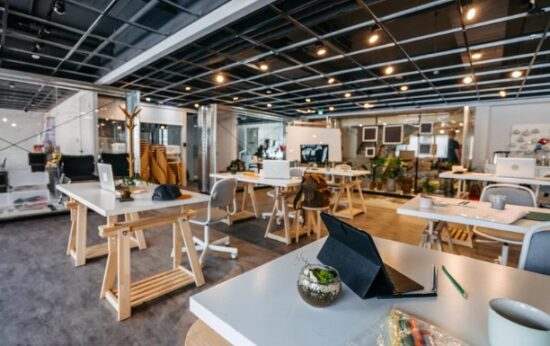
1. Optimize Your Lighting
Lighting stands as one of the most critical factors influencing energy levels and eye strain.
Exposure to natural daylight helps regulate your circadian rhythm, keeping you alert and focused during daytime hours. Position your desk perpendicular to a window to maximize natural light while avoiding the harsh glare from sunlight directly hitting your monitor.
If natural light is scarce, invest in high-quality LED desk lamps with adjustable color temperatures. Cooler, blue-toned light mimics daylight and promotes alertness, making it ideal for analytical tasks.
2. Prioritize Ergonomic Furniture
Physical discomfort instantly drains mental energy. An ergonomic chair that supports the natural curve of your lower back prevents poor posture and chronic pain over time.
Pair your seating with a desk at the correct height, ensuring your arms rest comfortably at a 90-degree angle while typing. Your monitor should sit precisely at eye level to prevent neck strain.
Modifying these physical touchpoints minimizes bodily stress, allowing your brain to dedicate its full resources to the tasks sitting in front of you.
3. Eliminate Visual Clutter
A disorganized desk directly translates to a disorganized mind. Stacks of loose papers, excess office supplies, and random household items compete for your visual attention, silently draining your cognitive bandwidth. Implement a strict organizational system using drawers, filing cabinets, or digital storage solutions to keep your primary surface entirely clear.
By removing unnecessary items from your peripheral vision, you immediately create a calmer, more controlled environment that naturally encourages sustained concentration.
4. Establish Clear Physical Boundaries
Separating your professional life from your personal life requires distinct physical boundaries, especially when operating from home. A dedicated room with a closed door is ideal for signaling to family members that you are unavailable.
Sometimes, moving the workspace outside the main house entirely offers the most effective solution. Setting up a detached workshop or a metal garage in Huntsville provides an isolated environment free from household distractions. Physical separation reinforces a strong psychological boundary, making it easier to disconnect at the end of the day.
5. Bring Nature Indoors

Integrating natural elements into your immediate surroundings actively reduces stress and improves air quality. Houseplants like snake plants, pothos, or peace lilies require minimal maintenance while adding vibrant color and life to a sterile room.
Studies consistently show that the presence of greenery lowers blood pressure and increases subjective feelings of well-being. Adding a small potted plant to the corner of your desk serves as a simple, highly effective method for refreshing your daily environment.
6. Regulate Your Acoustic Environment
Noise remains one of the primary culprits behind broken concentration. Background conversations, traffic sounds, or household appliances easily derail a complex train of thought. If you cannot control the ambient noise in your building, utilize noise-canceling headphones to block out external distractions.
Playing instrumental music, ambient soundscapes, or white noise provides a consistent auditory baseline that masks unpredictable background disruptions. Alternatively, installing acoustic panels on bare walls helps absorb echo in highly reflective rooms, creating a calmer setup that may also help reduce work stress breakouts caused by daily tension.
7. Introduce Meaningful Personalization
A workspace should reflect the personality and values of the person using it, without crossing into the territory of clutter. Selectively adding a few meaningful items creates a sense of ownership and comfort.
A piece of inspiring artwork, a framed photograph, or a specific color scheme makes the environment feel intentional and welcoming. Personalizing the area ensures it feels like a professional sanctuary rather than a rigid, corporate cubicle, ultimately boosting your overall daily morale.
8. Maintain Optimal Temperature and Airflow
The physical climate of your room significantly influences cognitive performance. Rooms that are too hot induce lethargy, while freezing temperatures distract from the work at hand. Maintain a steady temperature between 68 and 72 degrees Fahrenheit for optimal comfort.
Furthermore, stale air causes drowsiness. Keep the air circulating by briefly opening a window, using a small desk fan, or running an air purifier. Fresh, flowing air keeps you feeling awake and responsive throughout the afternoon.
Designing a Space for Long-Term Focus
Cultivating a high-performance environment is an ongoing process of observation and refinement. As your responsibilities evolve, the physical arrangement of your tools and surroundings should adapt accordingly.
By systematically addressing lighting, ergonomics, boundaries, and environmental factors, you construct a solid foundation that supports rigorous daily output. Thoughtful organization prevents physical fatigue and minimizes mental friction, clearing the path for uninterrupted productivity.