
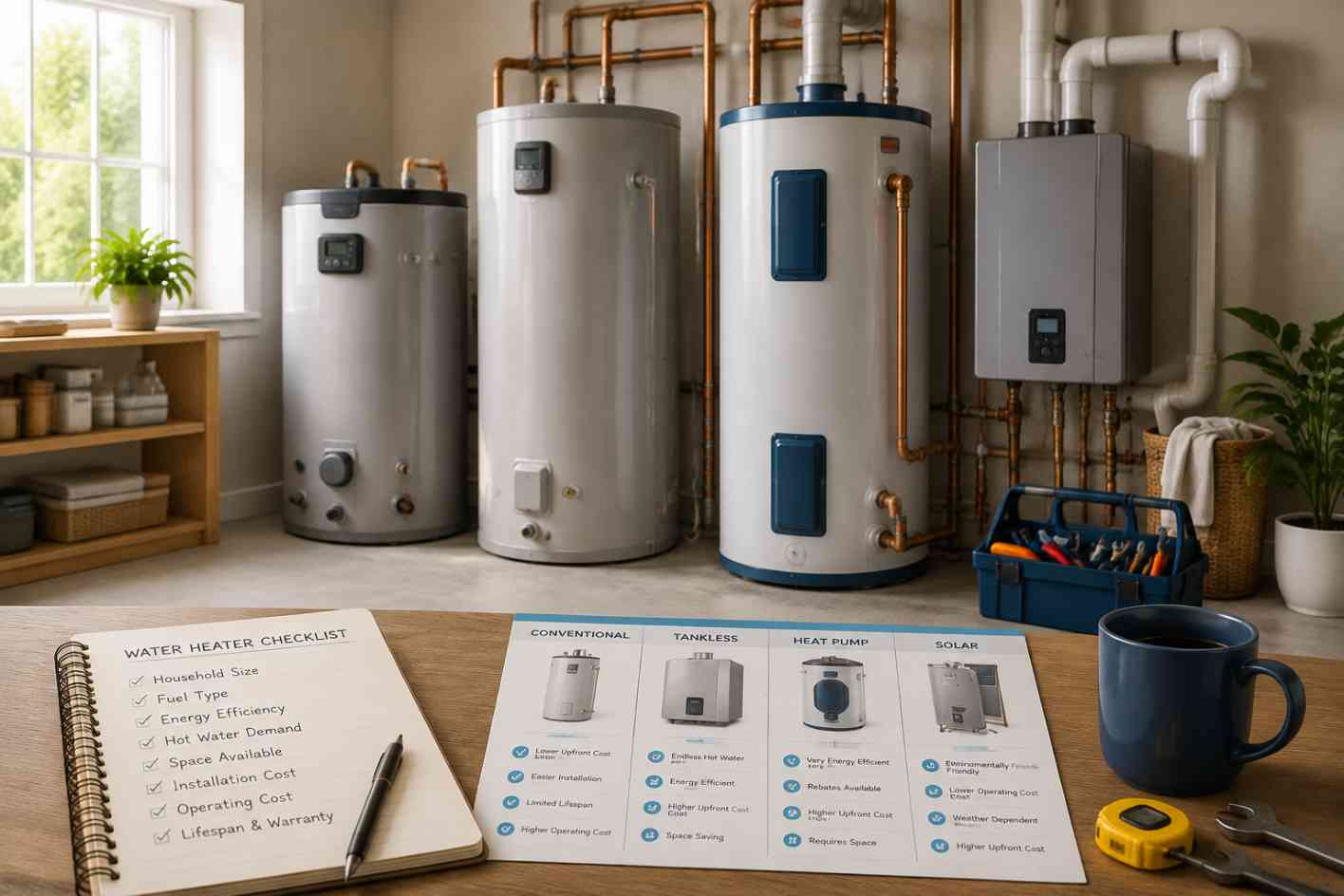
The wrong water heater choice can leave a household short on hot water, overpaying on energy, or dealing with premature breakdowns. The right choice feels invisible because it fits the home, the family’s habits, and the local water conditions.
That is why homeowners looking for water heater installation in Herriman should think beyond brand names and tank size alone. A sound decision starts with how your household actually uses hot water and ends with a system that is installed correctly, sized properly, and built to handle the demands of everyday life. 1st American Plumbing helps homeowners make that decision with practical guidance, not guesswork.
Start With Your Household’s Real Hot Water Demand
The first mistake many people make is shopping for a water heater based on the old unit they already had. That approach misses the bigger question: has your household changed? More people in the home, different schedules, newer appliances, or added bathrooms can all shift hot water demand in ways that matter.
A smaller home with predictable usage may do well with a conventional tank water heater. A larger family with back-to-back showers, laundry, and dishwashing often needs something more responsive. If the timing of hot water use overlaps heavily, the system must recover quickly enough to keep up. That is where sizing and system type become more important than most homeowners realize.
Bathroom layout and usage can also influence hot water needs, especially when a homeowner is updating an older space or adding fixtures. Small bathroom remodel projects should therefore consider plumbing access and hot water requirements alongside the visual design.
The Questions That Should Shape the Decision
A good installer will ask practical questions before recommending a unit:
- How many people live in the home?
- How many bathrooms are in regular use?
- Do multiple showers often happen at the same time?
- Is the household mostly gas, electric, or already set up for tankless?
- Is hot water demand steady all day or concentrated in the morning and evening?
These questions reveal whether your system needs storage capacity, fast recovery, or continuous heating. 1st American Plumbing uses that kind of real-world assessment to avoid oversizing, undersizing, or recommending a system that looks good on paper but underperforms in practice.
Tank vs. Tankless: The Decision Is About Fit, Not Fashion
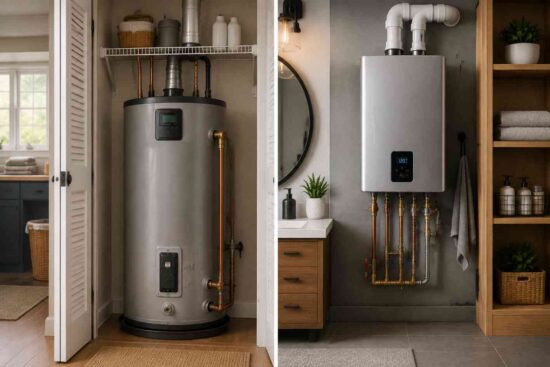
The tank-versus-tankless debate is often treated like a lifestyle choice, but it is really an engineering choice. Each option solves a different problem. The goal is not to choose the most modern option. It is to choose the one that fits your home’s usage pattern, utility setup, and long-term expectations.
A conventional tank water heater stores a set amount of hot water and keeps it ready. That makes it simple, familiar, and often cost-effective for homes that use hot water in predictable bursts. A tankless water heater heats water on demand, which can improve efficiency and reduce standby heat loss. But that does not automatically make it the better choice in every home. Installation requirements, capacity planning, and water quality all matter.
When a Conventional Tank Water Heater Makes More Sense
A tank system can be the better fit when:
- the home already has an appropriate tank setup
- usage is moderate and predictable
- upfront simplicity matters more than advanced features
- the household wants straightforward maintenance and replacement
Tank systems are also familiar to most homeowners, making them easier to understand and easier to service. For many homes, that is a real advantage. 1st American Plumbing services both gas and electric conventional tank water heaters, so the recommendation can be based on fit rather than a narrow product preference.
When Tankless Is Worth Considering
A tankless water heater is worth serious attention when:
- hot water demand is inconsistent
- space is limited
- the household wants to avoid running out of stored hot water
- long-term efficiency is a major priority
Tankless systems can be especially appealing for homeowners planning a conversion rather than a simple replacement. Still, they require proper sizing and may need specialized installation considerations.
That is why the best tankless decisions come from a careful assessment, not a generic sales pitch. 1st American Plumbing is particularly strong here because tankless conversions are not treated as a side service; they are part of the company’s core water heater work.
The Hidden Factors That Matter More Than Brand Names
The label on the front of a water heater does not tell the whole story. Homeowners often focus on capacity or efficiency ratings and overlook the details that drive performance in real homes. In practice, installation quality, water chemistry, and maintenance access often determine whether the unit lasts as expected.
Hard water is one of the biggest hidden variables. Mineral buildup can reduce efficiency, stress components, and shorten the life of the system.
In areas where mineral content is a recurring issue, regular flushing and descaling are not optional extras. They are part of responsible ownership. 1st American Plumbing offers maintenance services that address that reality directly, including flushing, descaling, and component care.
Homeowners should also pay attention to changes in how the unit sounds during normal operation, since unusual sounds can sometimes indicate buildup or other issues that deserve inspection. Is your water heater making strange noises. Knowing what those sounds may mean can help identify potential problems before they become more costly.
A few other details deserve attention as well:
- Anode rod condition: This component helps protect the tank from corrosion.
- Pressure relief valve function: A working PRV is essential for safe operation.
- Venting and clearances: Especially important for gas units and code compliance.
- Electrical or gas compatibility: The home must support the chosen system correctly.
- Access for future service: A tight installation can make maintenance harder and more expensive later.
When those details are handled well, a good water heater becomes a durable asset rather than a recurring problem.
Why Installation Quality Should Influence the Model You Choose
The best system in the world will still disappoint if it is installed poorly. That is why the installation plan should influence the equipment choice from the beginning. Some units are straightforward replacements. Others involve venting changes, plumbing adjustments, electrical work, or code-related updates that affect the total project.
For homeowners comparing options, the real question is not just “Which unit costs less?” It is “Which system can be installed correctly, safely, and in a way that supports long-term performance?” That is where working with a capable local team matters. 1st American Plumbing handles end-to-end installation, including removal of the old unit, plumbing connections, venting, electrical work where needed, and code-conscious setup.
That matters even more when the household needs a fast turnaround. If a water heater fails unexpectedly, speed is important, but speed alone is not enough. A replacement should still be sized correctly and installed properly. When stock allows, same-day installation may be possible, but the smarter priority is getting the right system in place rather than rushing into the wrong one.
How a Local Installer Helps You Avoid Expensive Guesswork
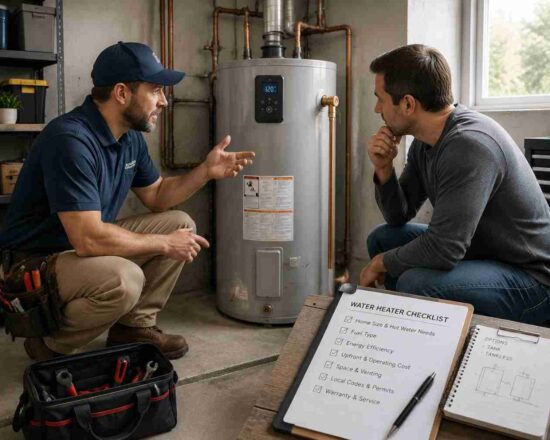
Choosing a water heater is easier when the installer thinks like an advisor instead of a vendor. The right contractor should help you compare options honestly, explain tradeoffs clearly, and recommend a system based on your home rather than a one-size-fits-all rule. That is where the value of 1st American Plumbing becomes clear.
A strong local provider will do more than swap equipment. It will help you think through the full lifecycle of the system: how it is used, how it is maintained, what the local water will do to it over time, and what type of installation will support reliability. That perspective is especially helpful for homeowners who are deciding between a simple tank replacement and a more involved tankless upgrade.
The best outcome is not just hot water on day one. It is a system that continues to perform without surprises. That requires honest sizing, careful installation, and a maintenance plan that fits the home. It also requires a contractor willing to explain what is necessary and what is optional, so the homeowner can make a clear decision without pressure.
The Smartest Choice Is the One That Fits the Home
A water heater should match how a household lives, not how a brochure looks. That means weighing demand patterns, available fuel type, installation complexity, maintenance needs, and the realities of local water quality. A good choice feels practical because it is built around the home’s actual conditions.
For many homeowners, the answer will be a reliable conventional tank system. For others, tankless will offer a better fit and better long-term value. The key is not to start with the equipment. Start with the household. Then let the system follow the need.
That is the advantage of working with 1st American Plumbing: the recommendation is grounded in real service experience, not speculation. If you want a water heater that is sized correctly, installed properly, and built for the way your home really works, that is the standard worth demanding.