Small bathrooms present the toughest challenge of any modern home. Confining and dated spaces may offer few design options, but there is an array of clever tips and design ideas to overcome their limitations.
Before swinging the hammer or deciding on the right fixtures, it is advised to open website design guides and browse room designs to imagine how altering the layout can help change a room’s perception. Here is an example of professional suggestions to improve a small room
1. Trade the tub in for a low-profile walk-in shower.
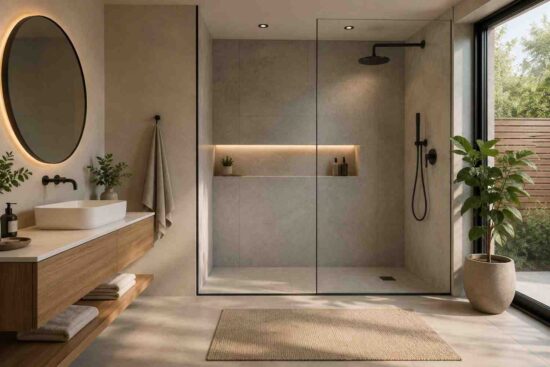
The quickest way to free up valuable floor space -visually and physically- is to replace a massive standard tub with a sleek walk-in. Tubs eat up enormous space and can make an already long, narrow bathroom feel like an endlessly elongated hallway.
A low-profile or curbless shower pan feels open and integrated. If planning for aging in place, the removal of a high tub wall also significantly reduces a trip hazard.
- Clear, frameless glass over a frosted curtain: Keeps sight lines open through the room.
- Single-slope floor created by a linear drain: Allows for an uninterrupted tiling layout.
- Floor tiles run into the shower pan: Blurs the boundaries of the room.
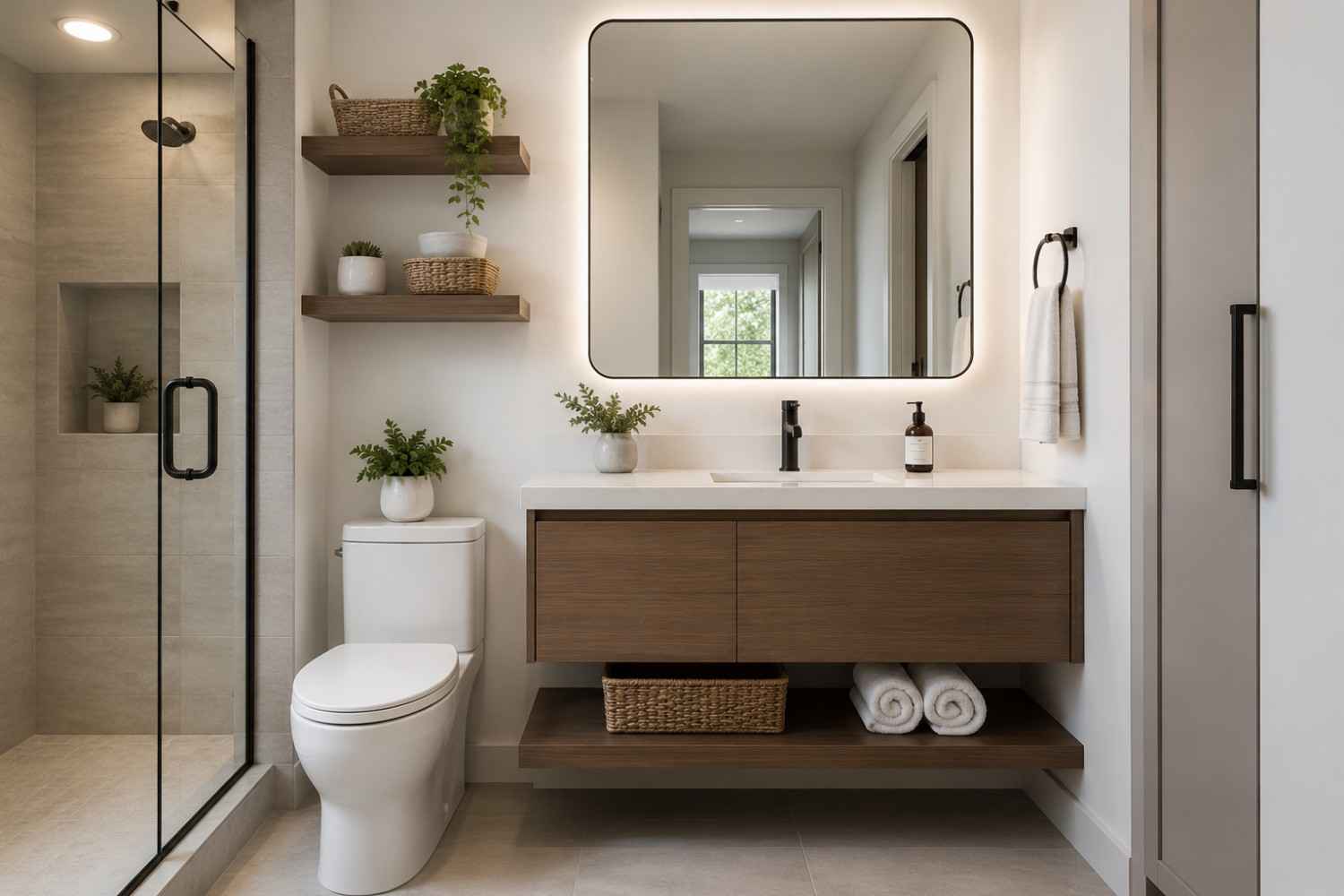
2. Use a Floating vanity
Standard floor-mounted vanities look like heavy obstacles in the middle of a small room. By installing a wall-mounted or floating vanity and raising the entire cabinet off the floor, the tile pattern can continue across a larger area of visible flooring. This clever illusion allows a room to feel more open because more of the actual floor space is in sight, and also provides the perfect space to store woven baskets or a scale out of the way.
Look for models with deep drawers to make sure all available space within is utilized efficiently without needing to awkwardly reach behind other items.
3. Find hidden storage in recessed wall niches
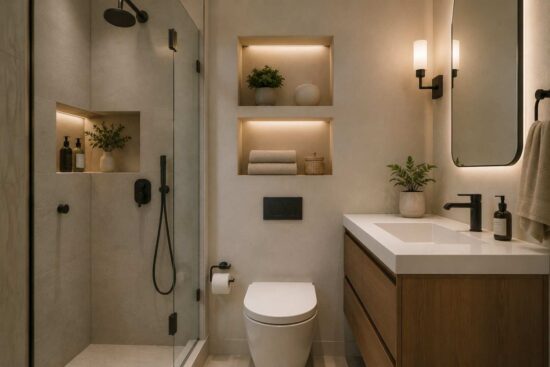
If you can’t extend out, go in. Fixed shelves protruding from the walls of small bathrooms become hazards in narrow walking spaces and should be avoided when possible.
By cutting into the existing wall and creating recessed niches in the stud space, you get an area to store amenities in shower stalls, a modern kitchen renovation, or in spaces above the toilet for guest toiletries.
- Studs– Check for any plumbing or electrical wires behind the studs that will interfere when you cut.
- Finishes– Install desired personal touches with contrasting tile or a solid surface to the inside of the niche that ties the rest of the room together.
- Waterproofing– If this niche is being constructed in the shower, special flashing methods will be necessary.
4. Install a Pocket Door
Swinging doors can take up a minimum of nine square feet of room with a mere swing arc. This means that you would need to jig around the toilet just to get inside and outside of the bathroom.
With the installation of the pocket door, it will enable the door to open and close seamlessly inside the wall without any radius of swing problem.
Expert tip: If the wall you would like to place a pocket door in has extensive plumbing lines or light switches, a sliding barn door mounted on the exterior of the bathroom is a smart workaround.
5. Utilize Vertical Space and install a pocket toilet
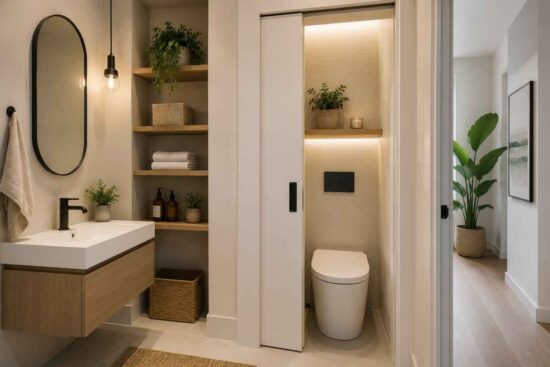
Every empty wall is a wasted organizing opportunity. Cabinetry or floating shelves that run all the way up to the ceiling lead the eye vertically to take advantage of room height. Also, switching a standard toilet for a wall-faced, tankless style can gain you as much as eight inches in depth.
A hefty flushing mechanism is tucked out of view behind the wall, and only a clean bowl is exposed, allowing precious floor space to open up.
Frequently Asked Questions
What tile sizes can I use for a small bathroom?
Large-format tile (like 12 x 24 inches) for small bathrooms because it offers less grout and a cleaner-looking, busier pattern. Fewer lines mean more space for your room.
How do I incorporate accessible design without it looking institutional?
Today’s safety hardware is sleek and modern. It’s possible to install high-end designer grab bars that also serve as towel racks and built-in shower seats that can be a low-profile addition using the same material, such as quartz or teak wood.
Build an Adaptive and functional oasis
Every great small bathroom remodel comes down to balancing looks and the reality of mechanics. Prioritizing custom recessed features, designing a high-end home, continuous glass enclosures, and suspended fixtures can take the pain out of overcoming your spatial constraints.
Whenever you feel prepared to sketch your space, be sure to open the website configuration tools running to iron out the exact specifications. The right decisions regarding layout will make your remodeled space look open, comfortable, and customized to your family’s routine for years.