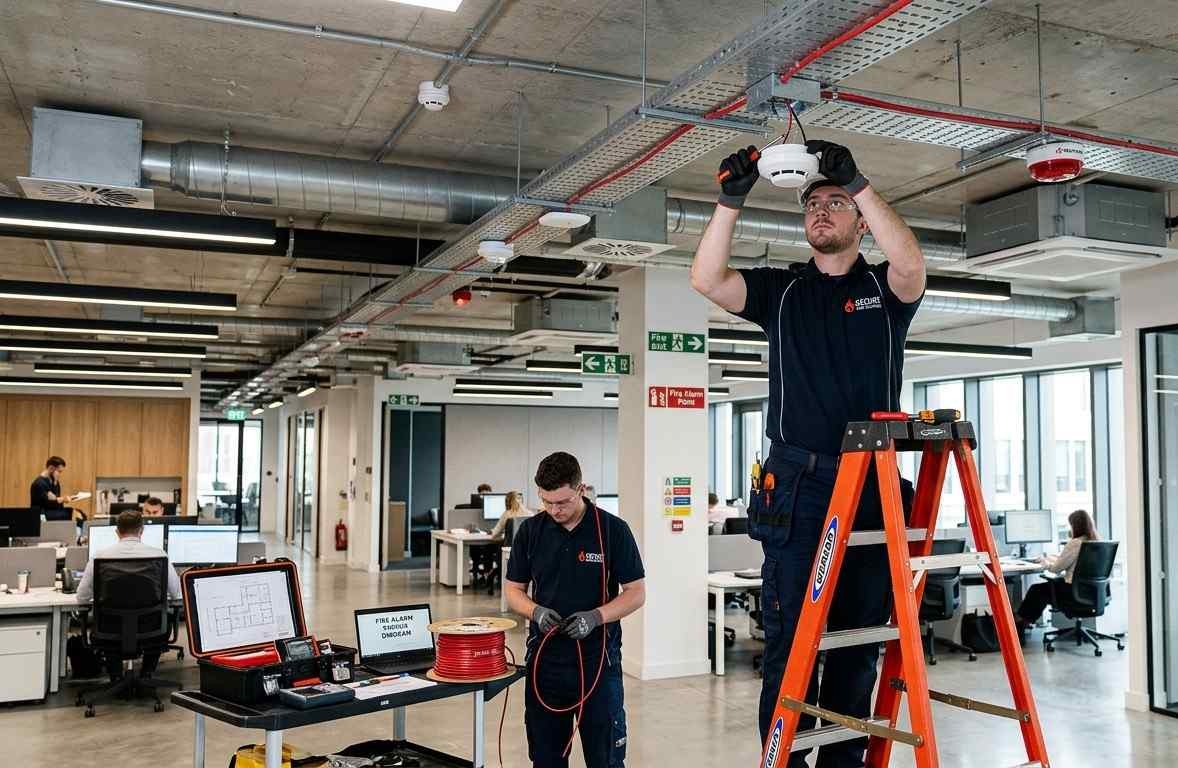
The safety of any business premises is built on achieving a balance between compliance and reliability. The improper choice of a life-safety system might result in serious damage to the premises, expensive false alarms, or even serious injuries. Managers should go beyond the compliance codes to choose something appropriate for the building.
For comprehensive planning, you can go here to map out localized safety requirements before choosing your hardware. Let’s look at the essential factors for matching a system to your building.
1. Conventional vs. Addressable Systems
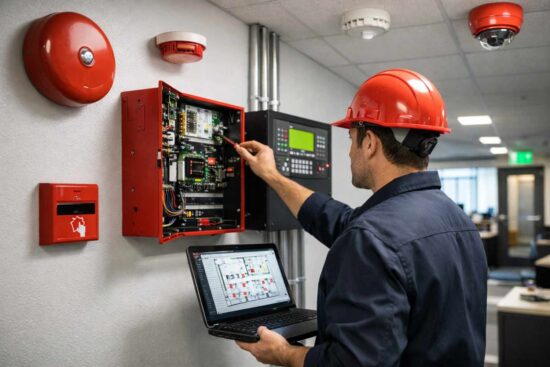
The choice between conventional and addressable architecture depends on the size and complexity of your facility. Conventional systems divide a building into broad zones, pointing emergency responders to a general area like the third floor.
Addressable systems give every single smoke detector, pull station, and heat sensor a unique digital identity. This lets the control panel show you the exact room where a threat is developing.
- Conventional: Best for small, single-floor retail shops or open warehouse layouts.
- Addressable: Essential for high-rise offices, multi-wing schools, and complex healthcare facilities.
- Maintenance Edge: Addressable panels pinpoint malfunctioning or dirty sensors instantly, reducing troubleshooting costs.
2. Structural Layout and Building Use Cases
A building’s physical environment dictates the type of detection technology you need. Standard ionization or photoelectric smoke detectors work perfectly in an office corridor but fail miserably in an industrial kitchen or a dusty warehouse.
High-ceiling environments like manufacturing bays often need beam detectors or aspirating smoke detection systems that actively sample the air, bypassing the issue of smoke stratification.
3. Mass Notification and Direct Escape routes
Effective and immediate information dissemination to people when they need to be removed quickly is vital. In multi-branch businesses, large educational settings, or facilities with a higher-than-average rate of occupants needing extra assistance, a single loud horn would not suffice.
Systems that implement voice evacuation will utilize intelligibility, and broadcast calm and specific, understandable language into specific zones, assist with directing occupants away from fire hazards, and indicate an alternative route through the use of integrated visual displays.
Expert Analysis: Response time alone increases when utilizing voice evacuation over bells or horns; in an emergency, the human mind is far more receptive to audible direction over noise.
4. Integrated Systems
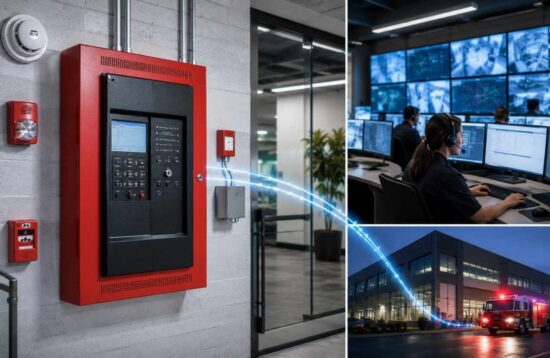
Modern life-safety networks do not work autonomously; the system needs to coordinate with the rest of the building systems when a fire incident occurs to control the situation. This indicates how the life-safety network will work with access control doors, elevator recall systems, and HVAC controls.
- HVAC Controls automatically shut down the fans to control the flow of toxic smoke from the burning areas of the building to other areas.
- Access Control systems unlock magnetic hold doors that allow occupants to leave the affected areas.
- Elevator controls recall the elevators to the ground level and prevent them from opening on an affected floor, and also trap passengers in the elevators.
Monitoring Services and Long-Term Reliability
An alarm that sounds in an empty building helps little to prevent loss of the property. Local control panels must be linked to an off-site, certified central monitoring station where the alarm can be verified and the authorities contacted within seconds. Using open protocol components is beneficial in the long term, too-you won’t be tied to one proprietary brand of parts forever when testing and service need to be done.
Frequently Asked Questions
1. How often do commercial fire alarms need to be tested?
The NFPA codes mandate frequent inspection of commercial systems. This usually involves monthly visual inspections and annual tests of each sensor, battery, and voice link function.
2. Can I use different brands of components?
It is usually not wise. Though certain open-protocol parts are cross-compatible, control panels and addressable devices should be of the same brand and model to facilitate reliable, error-free communication.
3. What is the most common cause of false alarms at a commercial location?
Usually, placement issues, where the smoke detector is placed too close to a kitchen, and a lack of cleaning cause dust to build up within the sensor element and set it off.
The Importance of Investment in Structural Fire Safety
Undervaluing safety in any way leaves you liable for future costs. Choosing the appropriate commercial system will help avoid unnecessary expenses related to malfunction and provide you with a versatile base for further development. Closely collaborating with a fire protection engineer will guarantee that all of your equipment will match the local requirements and hazards.
When it is time to plan out the building’s safety requirements, a precise fire alarm design will streamline approval with your local authority. Just as essential considerations for homebuyers include safety, reliability, and long-term value, businesses must also treat fire protection planning as a serious investment. Implementing this long-term architecture is an investment of your company’s capital and your business’s safety and sustainability.